The Forming of A Pot
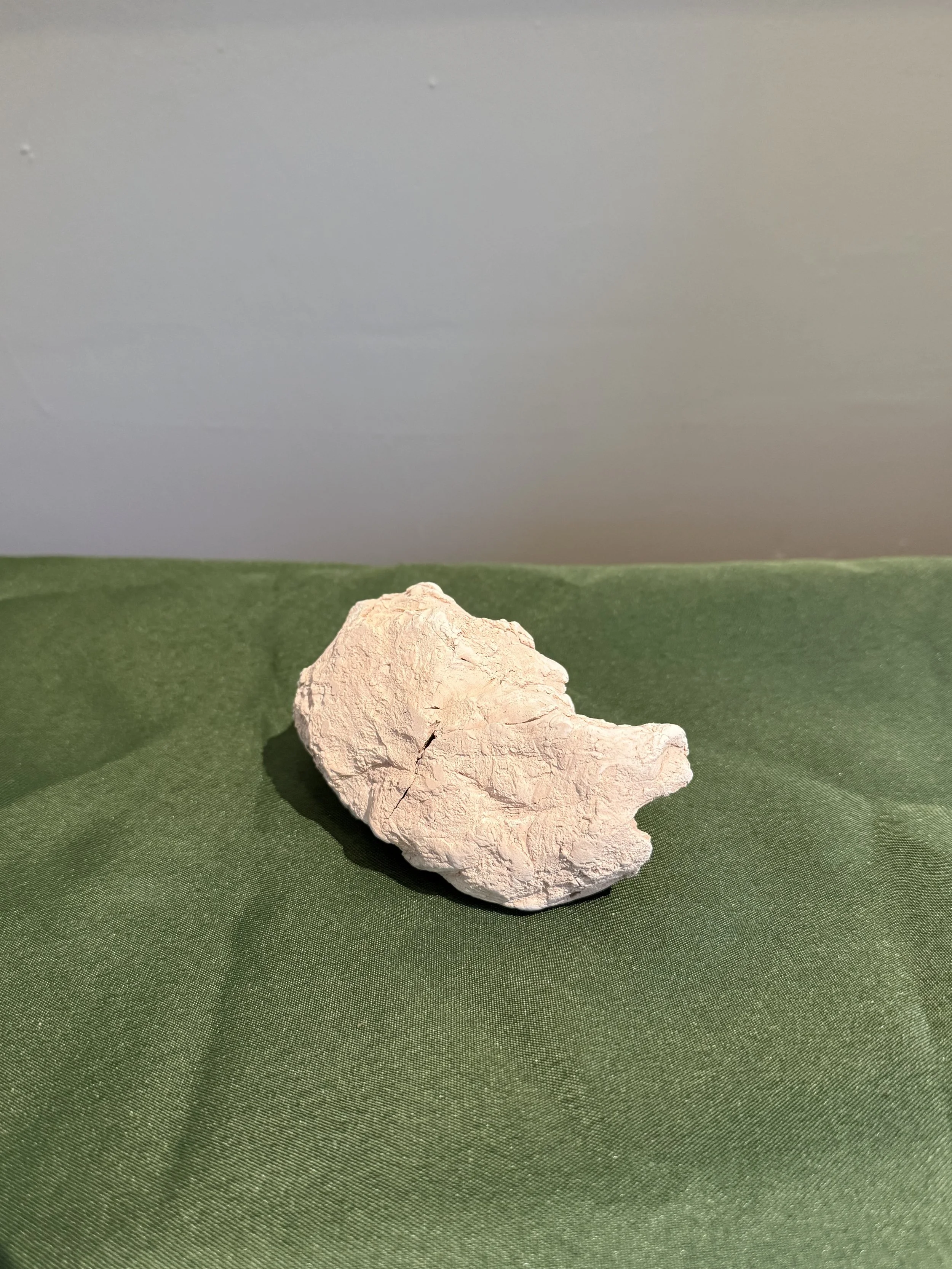
Wedging: Preparing the Clay
Before I can work efficiently with clay on the wheel, I must first create order out of chaos. The clay is “wedged” through a process similar to kneading dough until the molecules of clay become aligned and homogenous. Once on the wheel, the clay can unfurl easily as it spins.
As I wedge clay, I think about what it means to be formed in the Hands of God. I think about how the primary thoughts of His Heart toward me are delight and love. Before He does anything in us, He determines what we will be. But before we can allow Him to transform us, we must simply receive His delight in us. That is the knowledge that prepares our hearts to readily respond to His movements.
“For you created my inmost being; you knit me together in my mother’s womb…My frame was not hidden from you, when I was being made in secret, intricately woven in the depths of the earth. Your eyes beheld my unformed substance. In your book were written all the days that were formed for me, when none of them as yet existed.” (Psalm 139:13, 15-16)
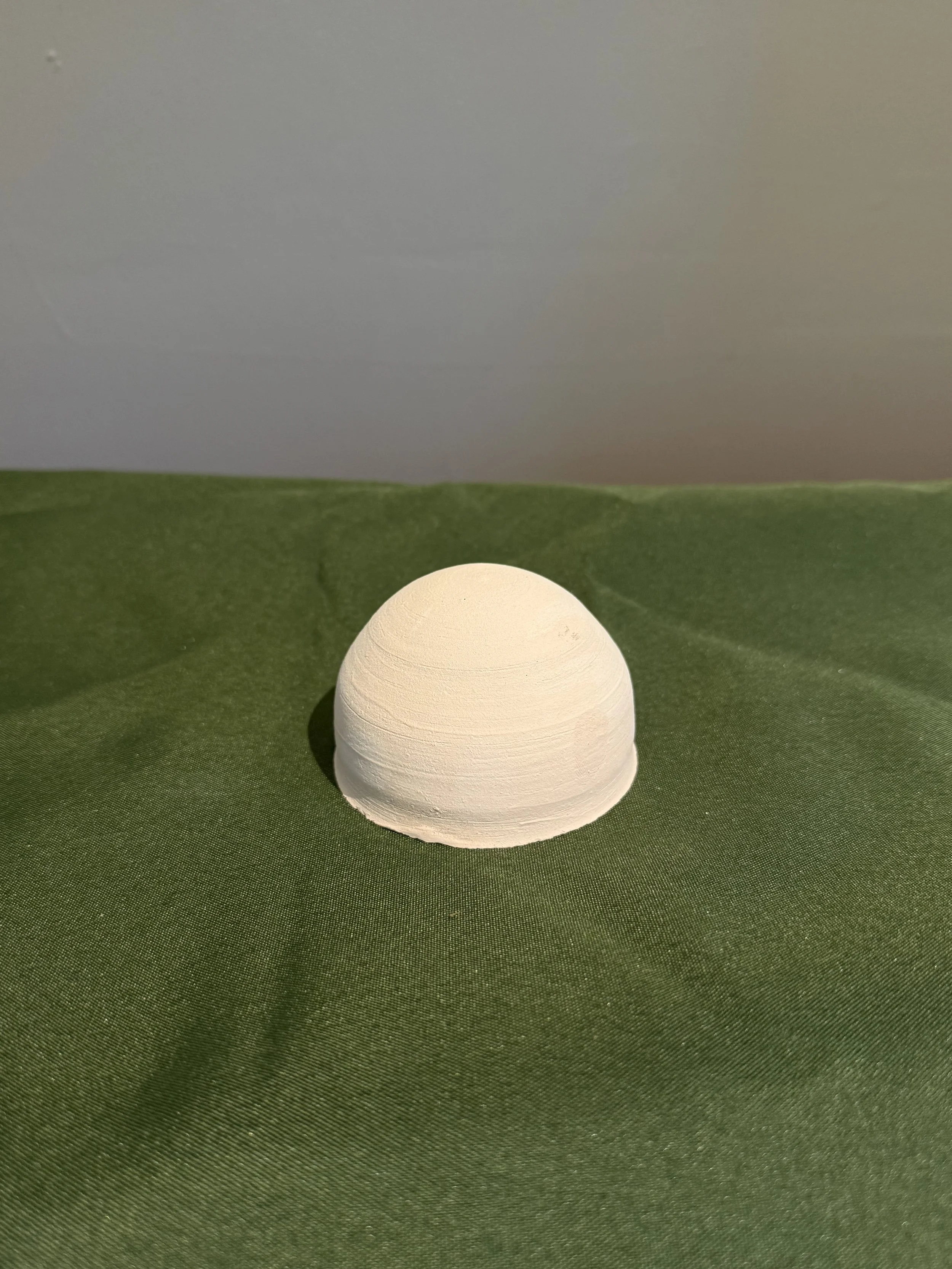
Opening:
Once centered, the clay is now ready to be opened. I use my thumbs to press down slightly below the center of the pot as the wheel spins and pulls the clay gently toward myself. Pulling the clay towards me actually prevents the clay from getting off-center during this opening process. I maintain control in a time when there is much centrifugal force against the pot. Pulling it toward me acts against those forces which would threaten the stability of the mound of clay.
I relate to the clay in this part of the process. It is going through a tremendous amount of pressure on all sides. In a way, one could say that it has no other option but to surrender; however, the question remains as to which force it will surrender to. It is so easy in life to surrender to the forces of anxiety and fear that seem to press in upon us, but how often do we recognize that there is another way and that we have the will within us to choose differently. “Have no anxiety at all, but in everything, by prayer and petition, with thanksgiving, make your requests known to God. Then the peace of God that surpasses all understanding will guard your hearts and minds in Jesus Christ” (Phil 4:6-7). If we surrender, amidst the anxieties of life, to the Hands that hold us, we will find that we will remain steady and at peace though all the world around us quakes.
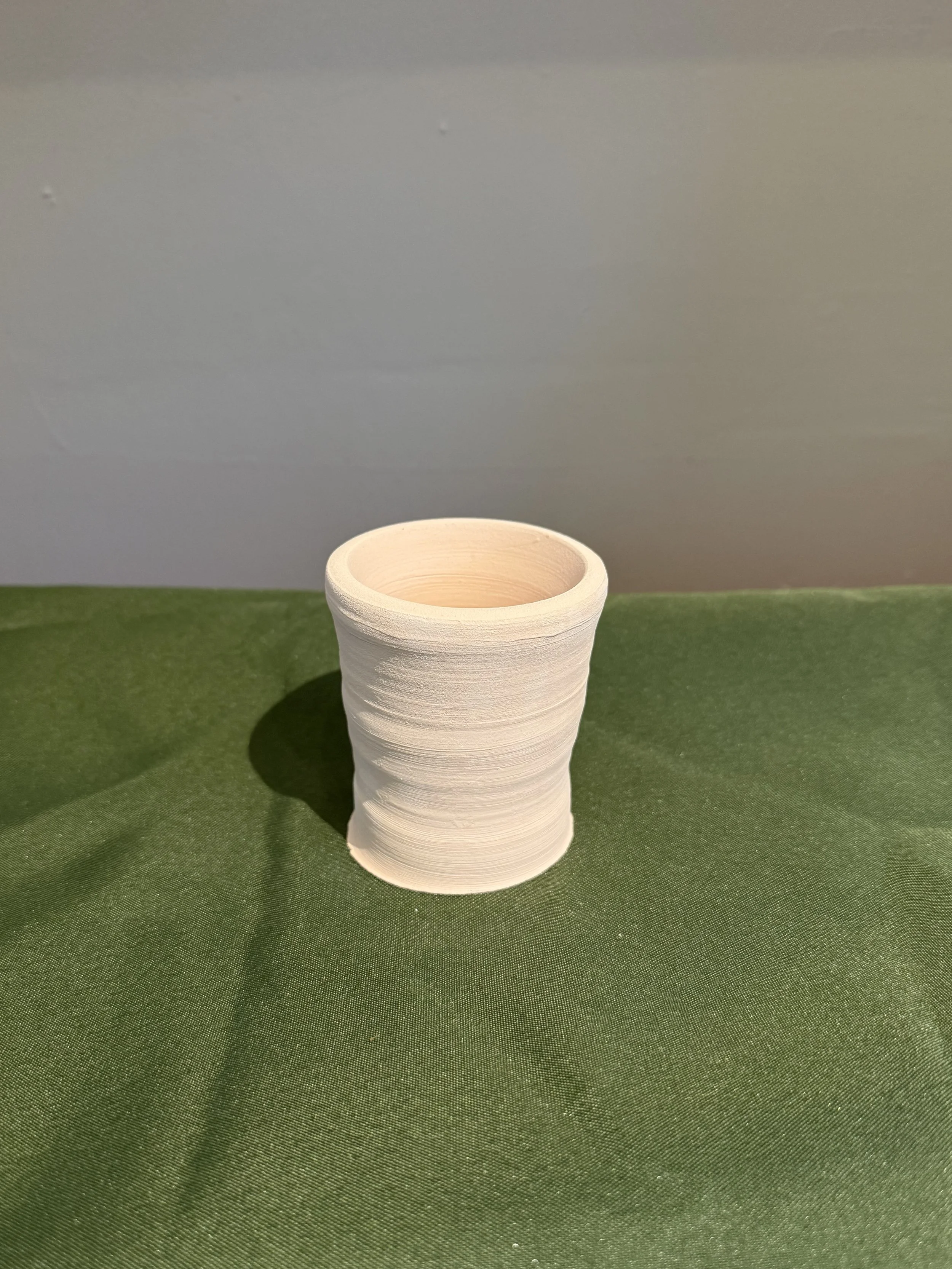
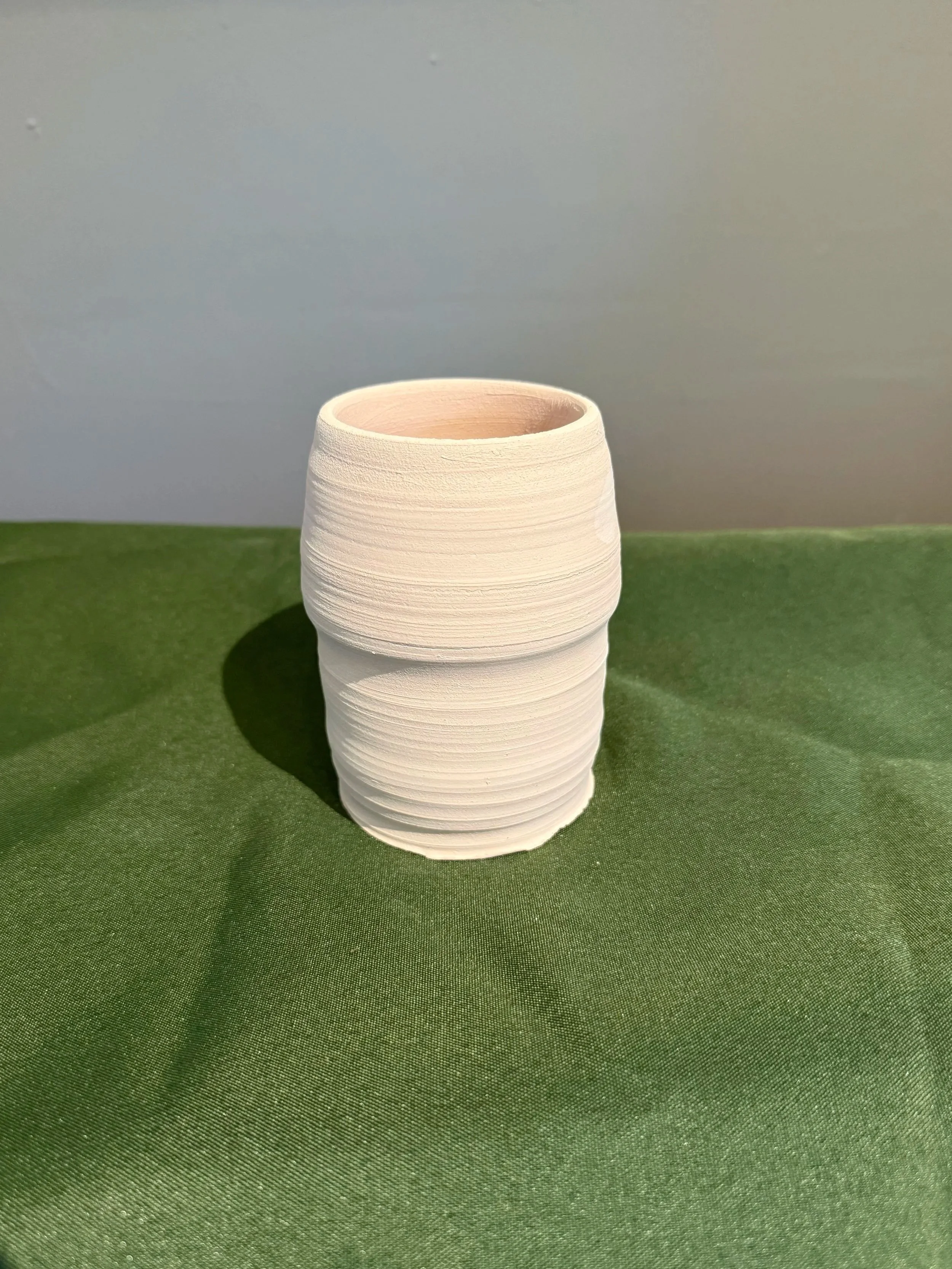
Final Forming - The Meaning of the Details:
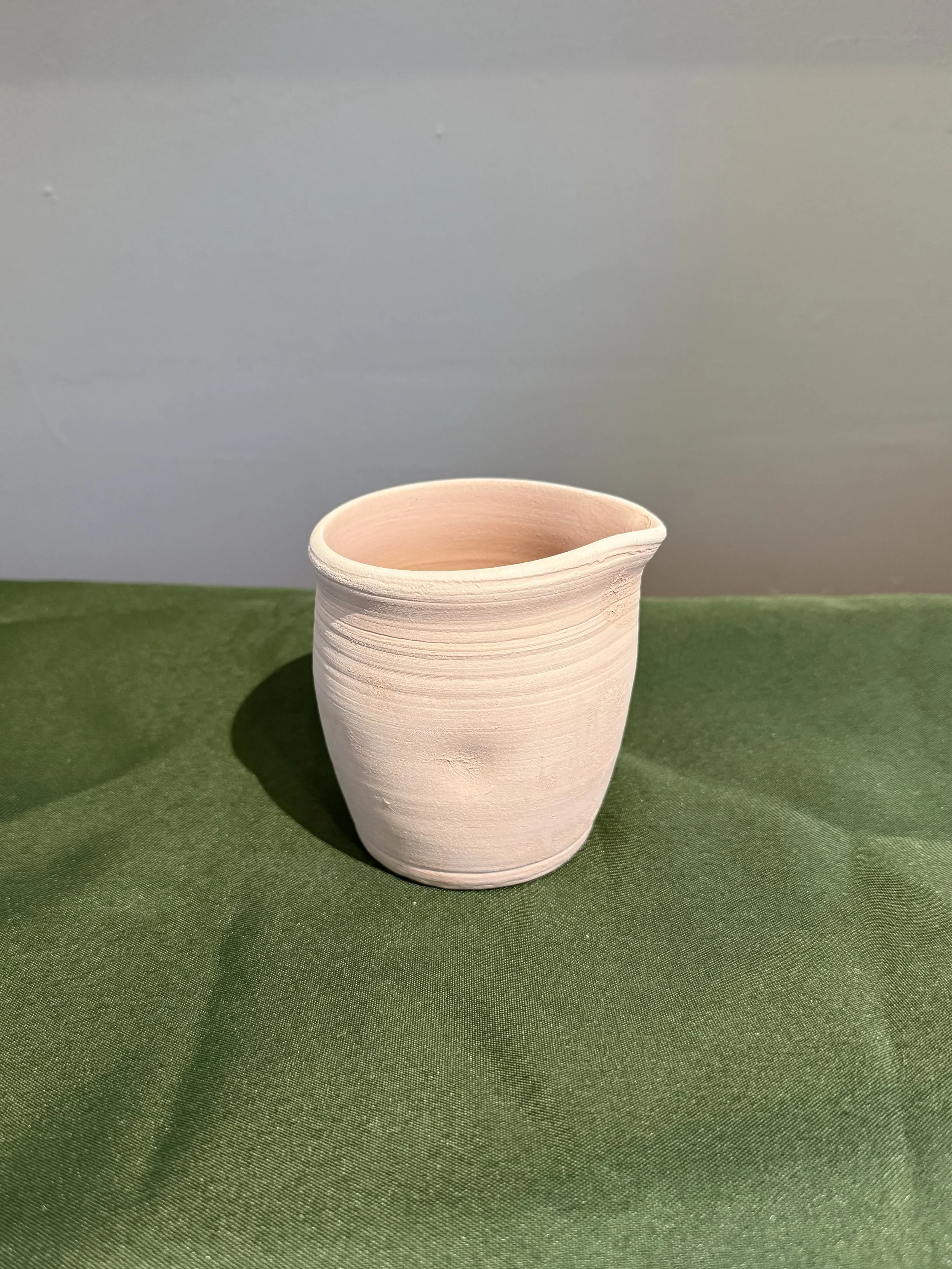
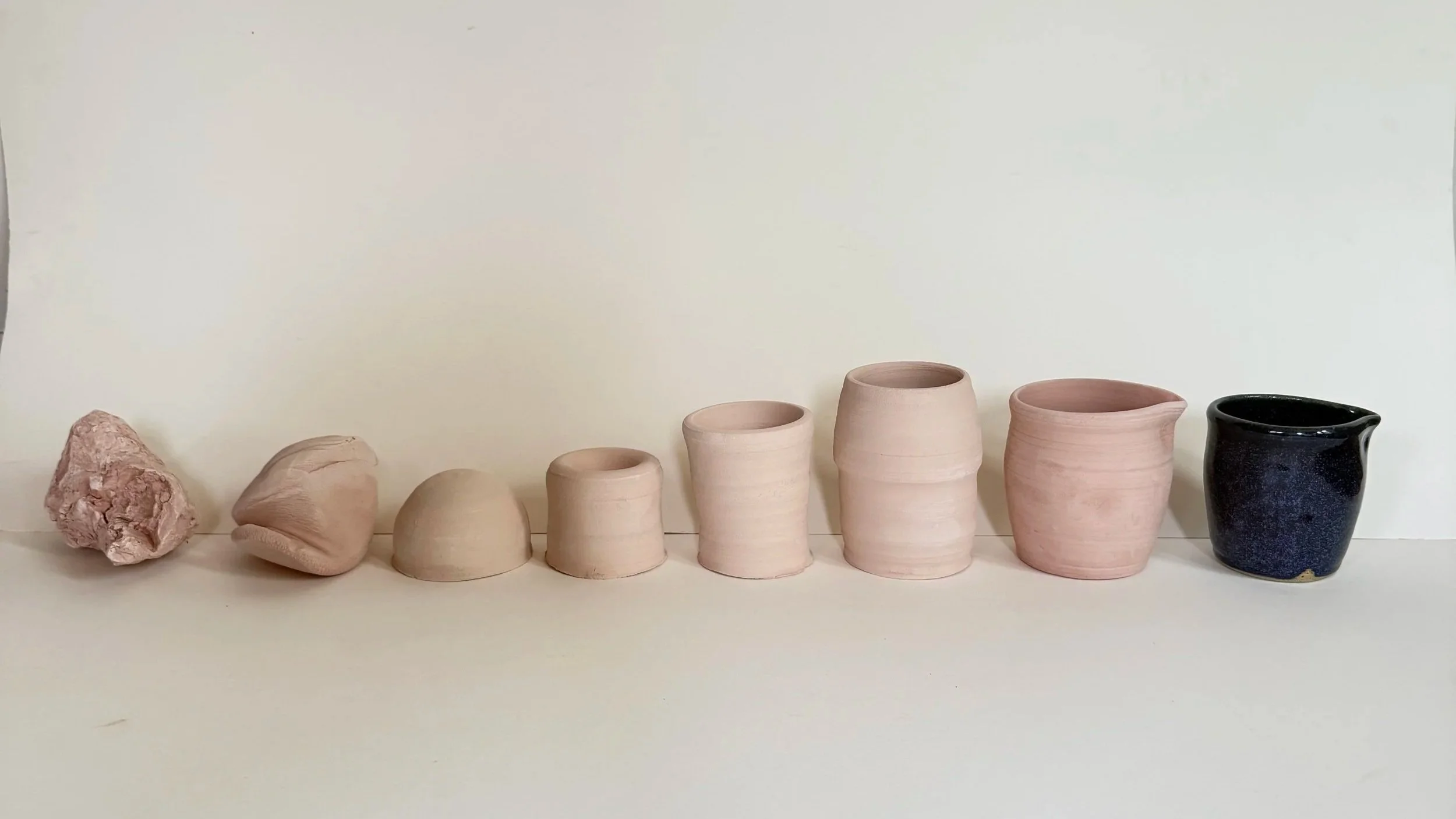
Now that the pot has reached the desired height, it is time to add more of the details that will shape it to its unique purpose. The pot displayed here is meant to be a pitcher. Therefore, the lip was shaped by hand into a spout. Rather than adding a handle, two dimples serve the purpose of acting as a place to grip the pot when pouring it out. A small line created with the indentation of a fingernail as the pot moved around on the wheel provides subtle definition to the foot.
When I am crafting, I pay attention to the smallest of details because of the message that I wish to communicate. Should the lip of the pot be tilted in or should it open? The decisions I make ultimately relate back to the purpose of the pot.
How can this relate to us on a human level? So often we look at ourselves through the lens of what we lack, wanting this talent or that physique, but what if the special gift we have to bring to the world is through the fact that we do not have this or that but have something else? Do we look at the details of our lives to see how there is meaning in it all and that those very details tell us something about who we are and our specific purpose?
“A Lump of Clay”
The wonderful thing about clay is that it can be worked and re-worked. I can start with clay freshly drawn from the earth or with clay scraps that have been crushed up and infused with water to become malleable again.
This reality can give us hope for whatever stage in which we may find ourselves. Sometimes, we feel like only a lump of clay, but we must remember to keep the final image that God has of us in view. If He looks on us and sees what we shall become in His Hands, should we not then take up the same view? The deeper the poverty we see in ourselves, the deeper the glory He shall receive in being able to transform something so lowly into something so glorious. This is why we can rejoice and boast in God in our weaknesses because our very humble beginnings magnify the skill of the Master Artisan’s Hand.
“But I am just a lump of clay,” we say. It is as if He responds, “I know it looks like just a lump of clay, but I am working on a Masterpiece.”
Centering:
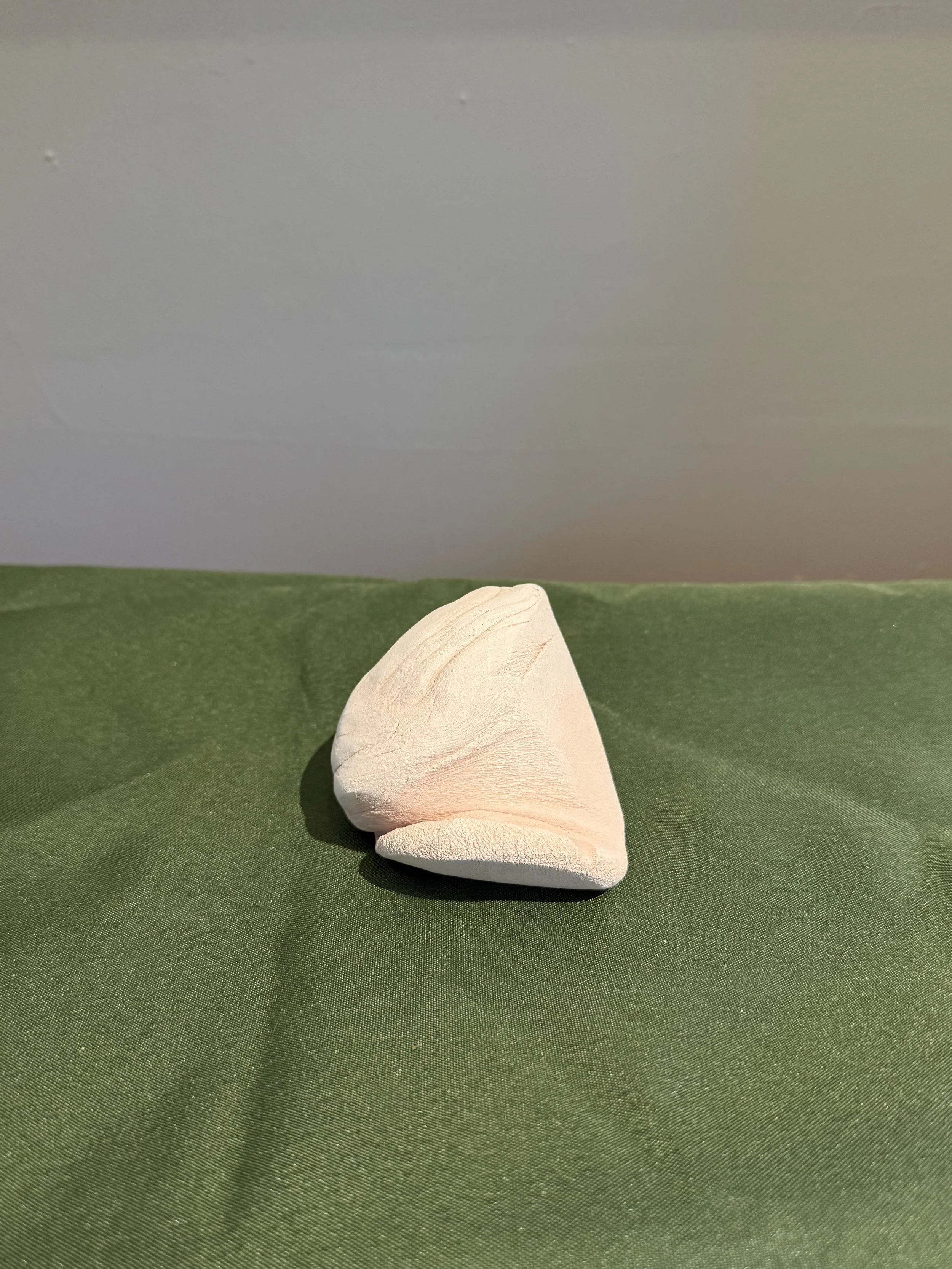
To be able to throw anything on the wheel, I must first center the clay. This is what allows me to have mastery over it. Without this step in the process, the clay will have “a mind of its own” and will wobble back and forth, becoming uneven. The clay is hit to the wheel forcefully and then sealed to the wheelhead to prevent it from flying off. I guide the clay up and down at a speed that is congruent with the speed of the wheel until it is centered.
Haven’t we all had the experience of living life feeling “off-center?” At times we try to juggle so many things and are unable to keep our focus on just one, on what is most important. Perhaps this is what Scripture seeks to provide the remedy for when it says to “humble yourselves under the mighty hand of God” (1 Peter 5:6). As a potter, sometimes this step in the process can feel like a wrestling match with the clay. Will the clay come under my way in the direction I am leading it or will it stubbornly resist? When it resists, it only prolongs its frustration and ultimately does not reach the end it hopes for. When it surrenders to my touch, there is peace and order is restored to the chaos.
Pulling - The Forming of the Walls
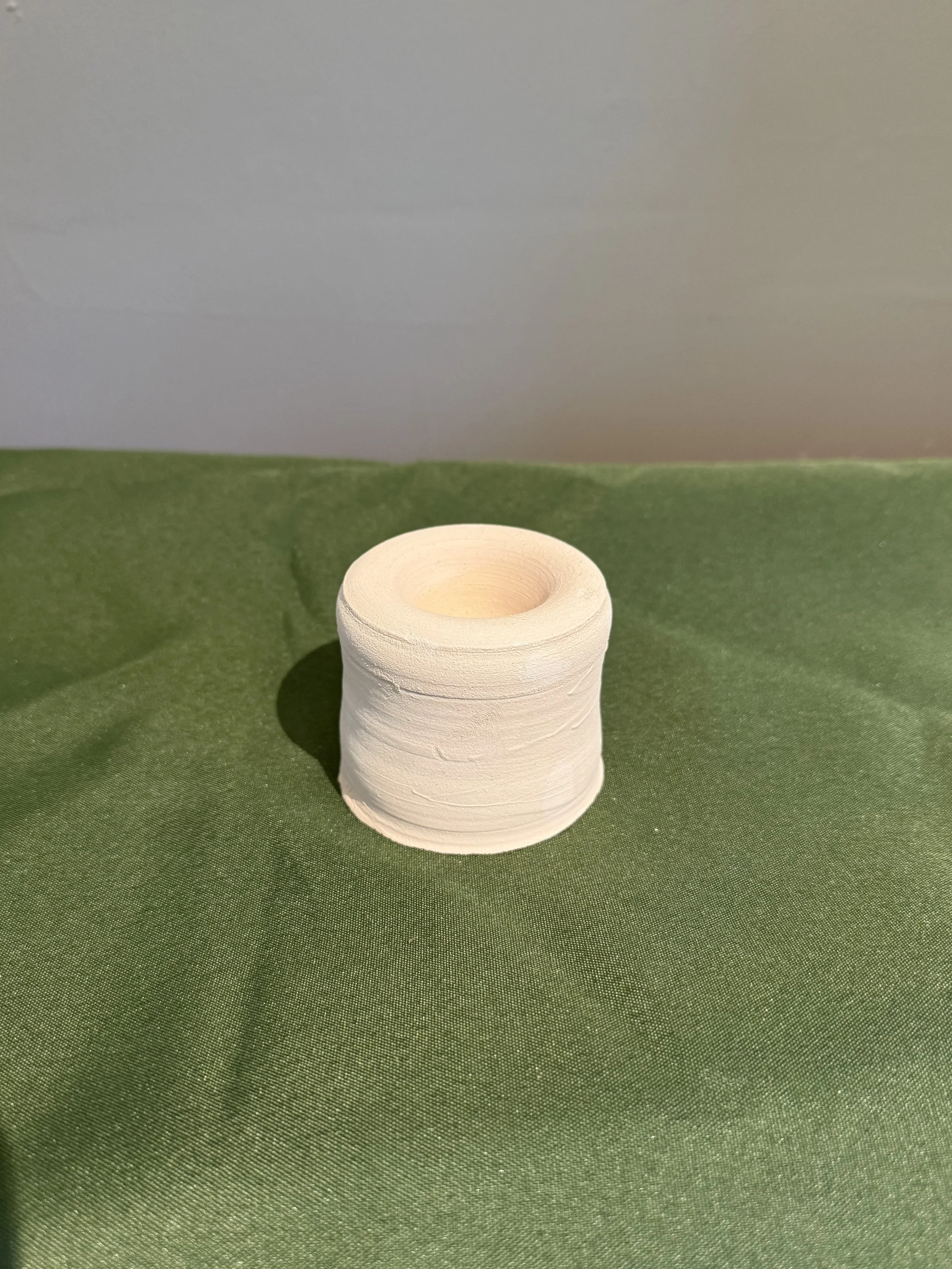
Once the opening is made, the clay is now ready to ascend in its height. I take a small amount of clay from the inside of the pot starting from the top and bring it to the bottom. This strengthens the wall. Now, I gather a small amount of clay from the bottom of the pot, draw it to the side wall and pull the clay up to the top of the pot to increase its height.
We can only ascend to the heights God wants to take us if we first receive God’s grace within us. Much has to happen to make this possible. Continually, we have to let ourselves forfeit trying to control. We have to trust the hands that are guiding us. This is the point in the process where it starts to look like a pot but clearly does not yet look like how it’s meant to be. We have to trust that, no matter what state we find ourselves in, we can and will become what God wants us to be if we continue to trust in His Hands and surrender to His will. So often this is the experience of the disciple of Christ, and it is only trust and blind obedience to His Hand that will see us through to His purposes which are beyond our understanding.
“Trust in the Lord with all your heart and lean not on your own understanding; in all your ways submit to Him, and He will make your paths straight” (Proverbs 3:5-6).
Becoming Bone Dry: Bisquing
Once a pot has finished being thrown on the wheel, it must completely dry out to be able to pass through very high temperatures without shattering. The temperature is brought to 1800 degrees F, at which point the clay is hardened but still porous to be able to take in water and be colored through the glazing process.
The best way I have heard the glazing process described is that the glaze covers the pot but is then “married” to the pot in the final firing. Until the glaze and pot reach over 2,000 degrees F, they are separate entities, not fully melded, but after that, the two become one; they are fused.
I find a beautiful parallel here with what it means to “put on Christ.” In Baptism, we are immersed in water and must pass through death in order to gain new life. We only reach final and full communion with God once we have passed through much purification, but we hold a sure promise – “Your Builder shall marry you” (Isaiah 62:5).
Final Firing
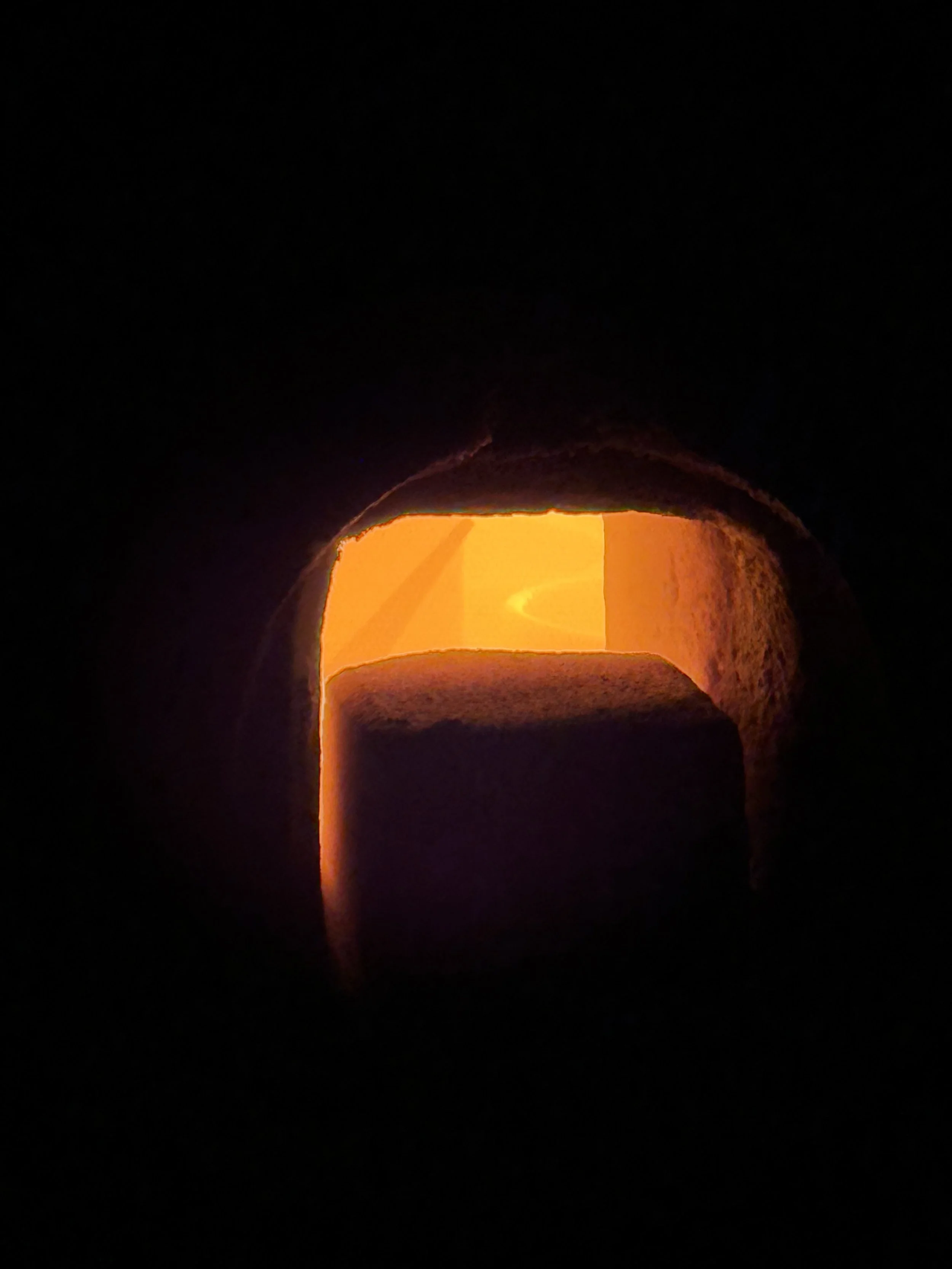
The red hot heat of the kiln makes the pot radiant in its light. It is completely immersed. It is easy to think of this process of firing as the final trials we will face in our lives. As the Scriptures say, our faith will be “tested by fire” (1 Peter 1:7). Yet this is not a trial that we should fear when we have faith in the God Who saves us and will strengthen us to remain faithful in all circumstances if we are willing and have recourse to Him. It was when Shadrach, Meshech and Abednego were in the furnace that they gave most glory to God by remaining steadfast in their knowledge of His goodness and by praising Him still. We have the path of victory marked out for us by “looking at Jesus, the originator and perfecter of the faith, who for the joy set before Him endured the cross, despising its shame, and has sat down at the right hand of the throne of God” (Hebrews 12:2).
Glory: The Final Masterpiece
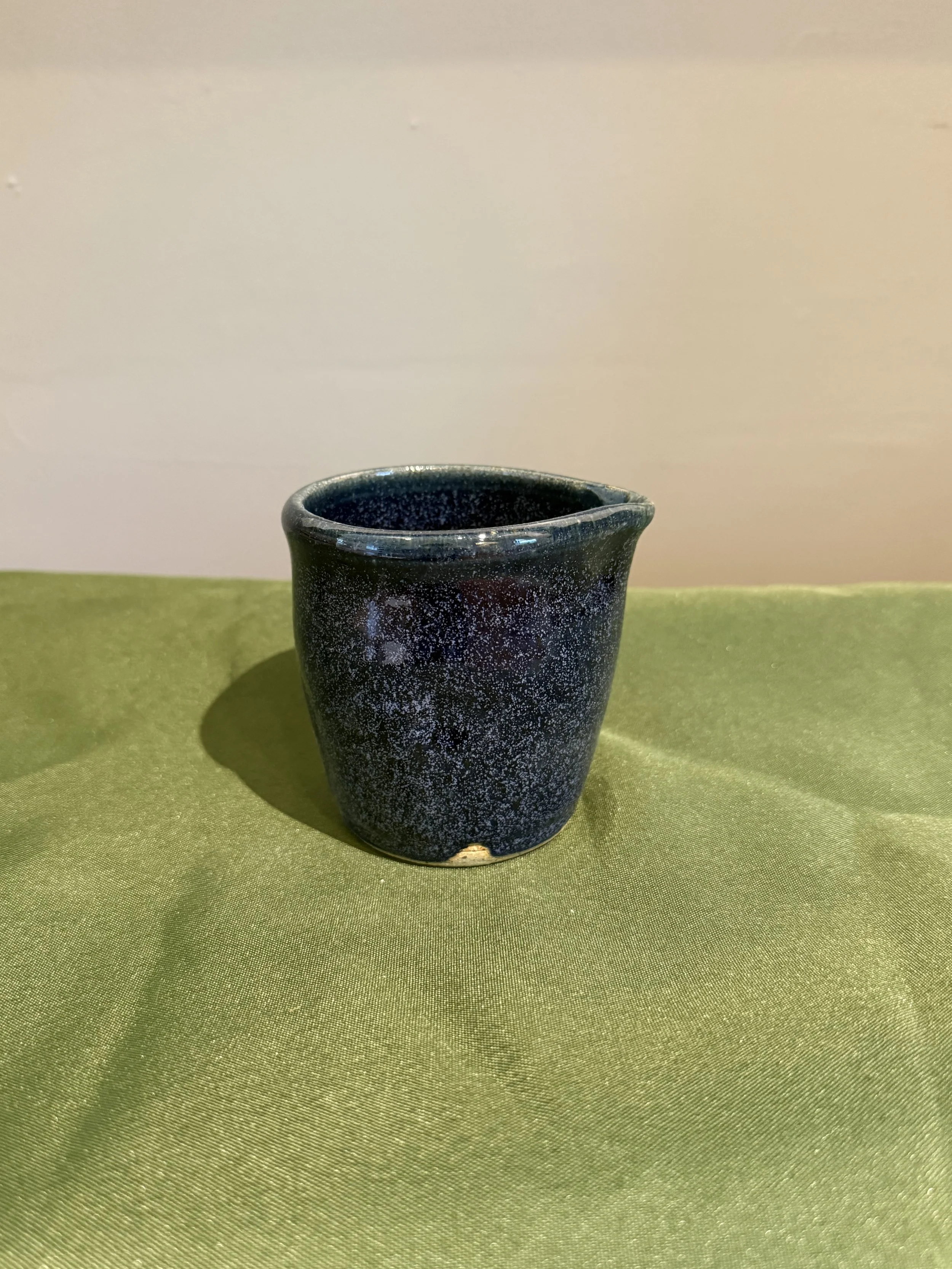
What began as a thought now exists; the intangible has become tangible. The thoughts which the potter had over the clay have now been translated into being. What began from just a lump of clay has now been transfigured in glory. Something new has been called forth, and so it is with every person, brought forth into being from the dust, straight from the Heart of the Master Creator.
“Thus says the Lord, who created you, Jacob, and formed you, Israel: Do not fear, for I have redeemed you; I have called you by name: you are mine…All who are called by my name I created for glory; I formed them, I made them” (Isaiah 43:1,7).
“The Forming of A Pot” by Emily Flaherty